
The gas vs wood fire pit question isn’t just about fuel. It affects convenience, maintenance, ambiance, heat, installation, and possibly even how often you’ll actually use the thing once the novelty wears off.
Neither option is “better.” The right choice comes down to whether you want instant flame and low maintenance or the slower, higher-touch experience of a real wood fire.
This guide walks through the practical differences—heat output, upkeep, cost, installation, and local fire restrictions, so you can match the fuel type to how you plan to use your backyard, whether you land on a Breck Ironworks custom fire pit or something else.
Key Takeaways
- Local fire restrictions can affect your choice. Gas is permitted during many burn bans, but not all of them. So confirm local rules before deciding, especially in Colorado and other wildfire-prone regions.
- Total cost of ownership matters more than sticker price. Installation, fuel, and maintenance all factor in.
- Custom fabrication can preserve the best parts of a wood fire while inherently providing the best parts of gas.
- Gas suits quick, low-effort evenings. Wood suits people who enjoy the hands-on process of building and tending a fire.
Gas vs. Wood Fire Pit: What’s the Difference?
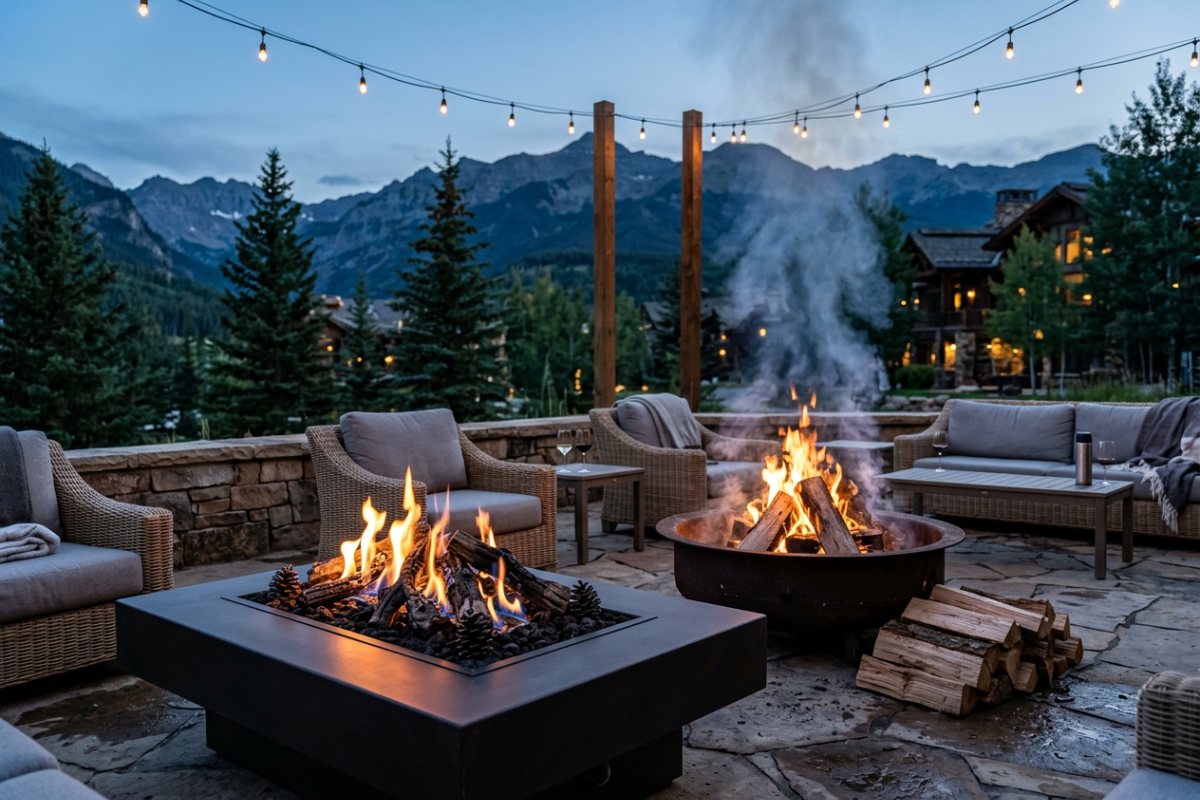
Fire pit options split broadly into two categories. A gas fire pit gives you controlled, on-demand fire with minimal cleanup, and a wood fire pit delivers a slower, more traditional campfire experience: smoke, crackling, embers, and the tending that comes with it.
Gas itself splits into two fuel types, natural gas or propane, which changes installation and how portable the piece can be.
Gas Fire Pits at a Glance
Gas fire pits start instantly, hold a controllable flame, and produce no wood smoke. Cleanup is minimal. What you’re trading for that convenience is infrastructure: gas models need a fuel connection, burner components, and some installation planning before the first flame.
Wood-Burning Fire Pits at a Glance
Wood-burning fire pits require sourcing firewood, lighting the fire, tending it, and dealing with smoke, ash, and embers afterward.
Gas vs. Wood Fire Pit Comparison: The Key Differences
| Factor | Gas Fire Pit | Wood-Burning Fire Pit |
|---|---|---|
| Startup | Quick and convenient | Requires kindling and firewood |
| Flame control | Easy to adjust | Controlled by adding/removing wood |
| Smoke | Minimal/no wood smoke | Produces smoke |
| Cleanup | Minimal | Ash and debris require cleanup |
| Fuel storage | Gas line or propane supply | Requires dry firewood storage |
| Ambiance | Clean, controlled flame | Crackling, traditional campfire |
| Heat consistency | More predictable | Varies with fire size and wood |
| Maintenance | Generally low | More hands-on |
| Installation | Requires fuel connection/planning | Generally simpler fuel setup |
| Best suited for | Frequent, convenient outdoor use | Traditional campfire experience |
No fuel type wins every category here. Gas suits frequent, convenient use. Wood suits homeowners who want the traditional campfire itself, not just the fire pit.
Which Fire Pit Provides More Heat?
Neither fuel universally produces more usable warmth. Perceived heat depends on burner design, BTU output, fire size, wind, seating distance, materials, and the layout around the fire, not simply whether it burns gas or wood. Radiant heat (the warmth you feel sitting nearby) is more a function of design than fuel type.
Why Fire Pit Design Matters as Much as Fuel
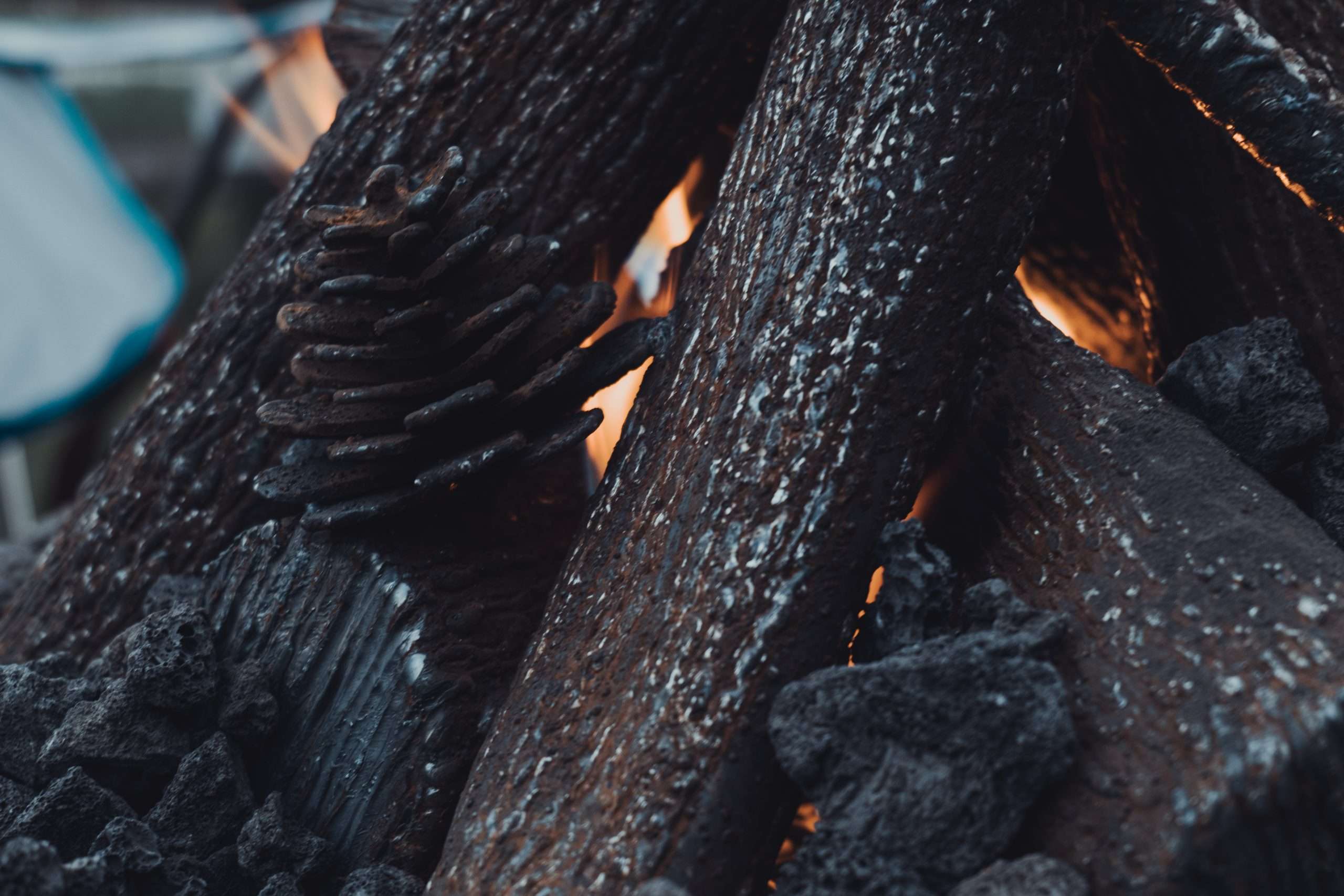
Burner configuration, dimensions, materials, and log construction all shape how heat is distributed around a fire pit. Our own steel log fabrication uses weathering steel, which holds and radiates heat differently than lighter gauge metal. That’s why handcrafted steel-log construction gets built around radiant heat rather than flame alone.
Which Is Easier to Use and Maintain?
Gas is, of course, easier to use. Only genies can start wood fires as easily as we humans can start gas ones. You can even snap your fingers when you turn it on, to fool your friends into thinking you’ve gained magic powers (works every time).
Gas Fire Pit Maintenance
Gas fire pits win on ease of maintenance too, but they still come with a certain amount of safety responsibility. Fuel connections and burner components still need periodic inspection by a qualified local professional, the same as any other gas appliance in your home.
Wood Fire Pit Maintenance
Wood fire pits were invented before the wheel, so they naturally require more labor: ash removal, firewood storage, ember management, cleaning. For people who use their fire pit often but aren’t genies, those tasks add up fast.
Which Creates the Better Backyard Experience?
A gas fire pit vs wood comparison here comes down to sensory experience, not technical specifications. Wood produces crackling, smell, and delightfully random flames. You know, like a normal fire. Gas is an improvement when you want a healthy fire fast, with virtually no prep or cleanup labor.
| If You Want | Consider |
|---|---|
| A traditional campfire atmosphere | Wood |
| Quick evening gatherings | Gas |
| Crackling and natural smoke | Wood |
| A cleaner, controlled experience | Gas |
| Minimal cleanup | Gas |
| A rustic camping feel | Wood |
| Consistent flame control | Gas |
Gas vs. Wood Fire Pit: Installation and Placement Considerations
Decide your fire pit’s fuel type before you finalize its location. Gas installations introduce utility and connection considerations that wood doesn’t. Either way, proximity to structures, seating, landscaping, utilities, surface materials, and ventilation all affect where the piece can go. Keeping defensible space around any fire feature is a wildfire-safety measure as much as a design one, and local fire codes, burn restrictions, and installation requirements vary by location, so confirm all of it before installation.
How Fire Bans and Local Regulations Affect Your Choice
Research local fire restrictions before you settle on a fuel type, especially in wildfire-prone regions like Colorado and the rest of the west. Gas fire pits aren’t automatically permitted during every fire ban. Local fire districts typically exempt propane and natural gas appliances that don’t produce sparks or embers, but that exemption isn’t universal, so verify current local requirements before you decide. Colorado’s own fire-pit culture grew directly out of this: strict state and county burn bans are part of why gas fire features became so popular here.
Gas vs. Wood Fire Pit Cost: What Should You Budget For?
Compare total cost of ownership, not just the initial purchase price. Besides the fire pit itself, costs can include installation, fuel, maintenance, accessories, and, for wood, firewood storage and potential infrastructure.
| Cost Category | Gas | Wood |
|---|---|---|
| Initial fire pit | Product-dependent | Product-dependent |
| Installation | Potentially higher | Often simpler |
| Fuel | Natural gas/propane | Firewood |
| Storage | Minimal for natural gas | Requires wood storage |
| Cleanup | Low | Ongoing |
| Maintenance | Generally low | More frequent |
| Long-term cost | Usage-dependent | Usage-dependent |
Which Fire Pit Is Better for Different Backyard Lifestyles?
Frequent entertainers get the most out of gas. The startup is fast, the heat is controllable, and the cleanup is minimal. Traditional outdoor enthusiasts tend to prefer wood, for obvious reasons.
Luxury outdoor-living spaces benefit from treating the fire feature as part of the architecture and landscaping, not an accessory bolted onto a finished patio. Fire features are a growing trend in outdoor renovations, often built in as the anchor point rather than added afterward.
Mountain and cold-weather homeowners have their own priorities: fuel availability, weather exposure, fire restrictions, and whether the space stays usable once the temperature drops.
Where a Custom Gas Fire Pit Changes the Equation
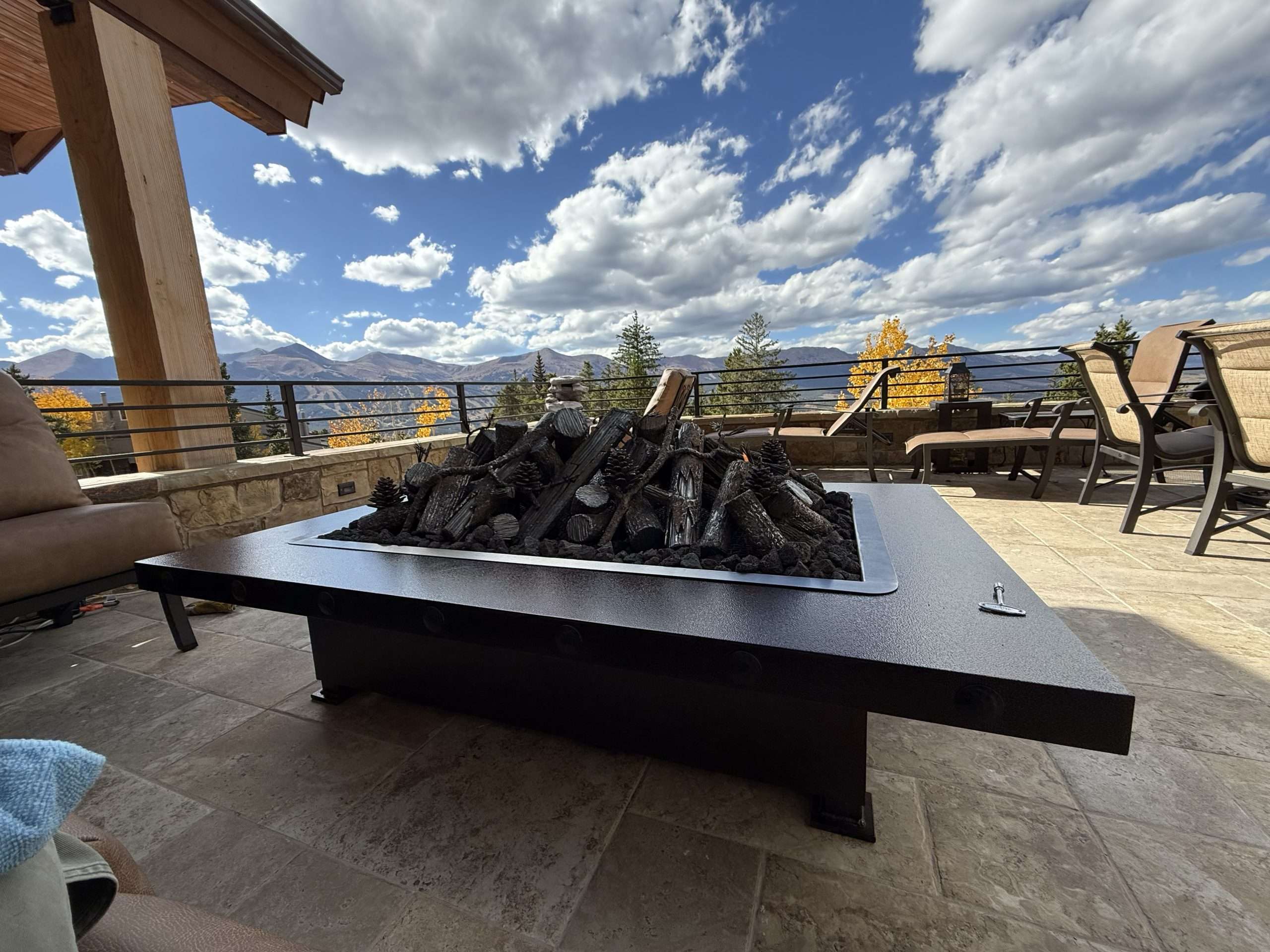
A custom gas fire pit doesn’t have to look like a generic manufactured appliance. Handcrafted steel logs, branches, pinecones, custom bases, shapes, and finishes can preserve the visual character of a traditional campfire while supporting the convenience of gas.
Our own custom fire pits are handcrafted from recycled steel, and we have multiple models to start from, including the Treeline. Every weld follows structural welding standards set by the American Welding Society, the same code used on structural steel projects far larger than a backyard fire feature. You can browse more custom fire pit ideas and current base and finish options in our gallery.
Why the Treeline Is a Good Example
The Treeline is a gas-powered fire feature built around a teepee-style arrangement of detailed steel logs, branches, pinecones, and pine needles. It’s a perfect example of how a homeowner can choose gas for convenience without giving up the visual character people associate with a real wood fire. The Treeline runs on natural gas or propane and comes in three standard sizes, so the fuel and size decision doesn’t have to compromise the design.
Questions to Ask Before Buying a Fire Pit
Before buying, evaluate your space, how often you’ll use it, whether natural gas is already available at the property, your tolerance for maintenance, and any local fire restrictions. Decide whether the piece needs to be permanent or portable and roughly how many people will typically gather around it. Then work through the design questions: size, seating arrangement, surface material, the surrounding landscape, and whether you want the fire pit to function as an architectural centerpiece or just a heat source.
Conclusion
Gas prioritizes convenience, control, and low maintenance. Wood prioritizes traditional atmosphere and the fire experience itself. There’s no single best fire pit for backyard use, and the physical design of the piece matters as much as the fuel source once you’re investing in a premium outdoor-living centerpiece. We build ours in Colorado from recycled steel, fully customizable, and ship nationwide, so the fuel decision doesn’t have to limit the design.
FAQs
Can you roast marshmallows over a gas fire pit?
Not in the traditional sense. Gas flames don’t produce the embers or wood smoke that roasting relies on. Some homeowners still roast marshmallows over a gas flame for fun, but it won’t be quite the same.
Does a gas fire pit work during cold or windy weather?
Yes, though wind affects flame height and heat distribution more than cold does. A well-designed burner and surrounding structure help keep the flame steady in wind, which is part of why fire pit design matters as much as the fuel itself.
How long does a gas fire pit typically last?
It depends on build quality and materials, but a well-fabricated steel fire pit with proper burner components can last for decades with basic upkeep. Cheaper manufactured units with lower-grade steel or components tend to wear out much sooner.
Can a gas fire pit be installed on a wood or composite deck?
It depends on the specific deck material, local fire code, and clearance requirements, so this is worth confirming with a local professional before installation. Heat shields, proper clearance, and fire-resistant materials under the unit are common requirements for deck placement.
Should I choose natural gas or propane for an outdoor fire pit?
Natural gas works well if a gas line already reaches the space, since it means no tanks to refill. Propane is more flexible for portability and locations without a gas line, though it does mean managing tank swaps or refills. The propane vs natural gas fire pit decision usually comes down to what’s already available at your property.