
It’s late June, the grass has gone brown, and the county just announced fire restrictions. The question almost everyone asks at this point: are gas fire pits allowed, and can I use my fire pit during a Colorado fire ban?
The short answer is that it depends on what you burn. This guide covers how the restriction stages work, where gas fire features stand, how to keep any fire pit safe, and what to look for in a Colorado fire ban fire pit that fits the way this state operates.
One thing to know up front: rules are set by county, town and fire district, and they change fast. We’ll explain the logic and tell you where to confirm the current rules for your address.
Key Takeaways
- This blog post isn’t the law, and it certainly isn’t legal advice. Verify every layer of rules that applies to you before you light anything.
- Restrictions generally target open fires, not all flames. Gas and propane devices with a shut-off valve are typically exempt through Stage 1 and Stage 2.
- Rules are set locally, and they stack. County, town, fire protection district and HOA can each impose their own unique requirements on the same property.
- Safe setup is important whichever fuel you choose.
- Steel logs keep the look of a wood fire and stay legal for most of fire season.
How Colorado Fire Restrictions Work: Stage 1, Stage 2, and Beyond
Restriction levels follow a rough statewide pattern, though every order is written locally.
| Stage | What It Generally Restricts | Its Effect on Wood Fire Pits | Its Effect on Gas/Propane Fire Pits |
|---|---|---|---|
| Stage 1 | Campfires and open burning in many settings; smoking and fireworks limits | Typically restricted, with exceptions (e.g., permanent rings in developed sites) | Generally allowed where the device meets requirements |
| Stage 2 | Open fires of any type, charcoal broilers, smoking outside vehicles/buildings | Prohibited | Generally allowed if the device can be shut off with a valve and meets requirements |
| Stage 3 / closures | Closure of public lands; private-land rules vary | Prohibited | Verify with local authority |
Those are baselines and this sure isn’t legal advice. Counties, cities, and fire districts can all be stricter.
Here in Summit County, the county commissioners adopt the restriction, the Sheriff serves as county fire warden and recommends when to move between stages, the Sheriff’s Office enforces it, and individual fire protection districts handle permits. Summit County’s own restriction guidance is the reference point for Breckenridge readers, and most Colorado counties publish something similar.
Do Fire Bans Apply to Backyard and Patio Fire Pits?
This is where the confusion starts. Most restrictions are about open fires and campfires, but what that means on private property varies by jurisdiction.
Under Stage 1, some jurisdictions allow backyard wood pits with ember screens and an active permit from the local fire protection district. Stage 2 generally closes that door.
Permanent fire pits are treated differently from portable ones. Developed sites are different from undeveloped sites, too.
Property type adds another layer. A private home, a short-term rental, a restaurant or resort patio, and an HOA community can each carry different rules, and they stack. Check every layer that applies to you.
Why Gas Fire Features Can Survive Restrictions
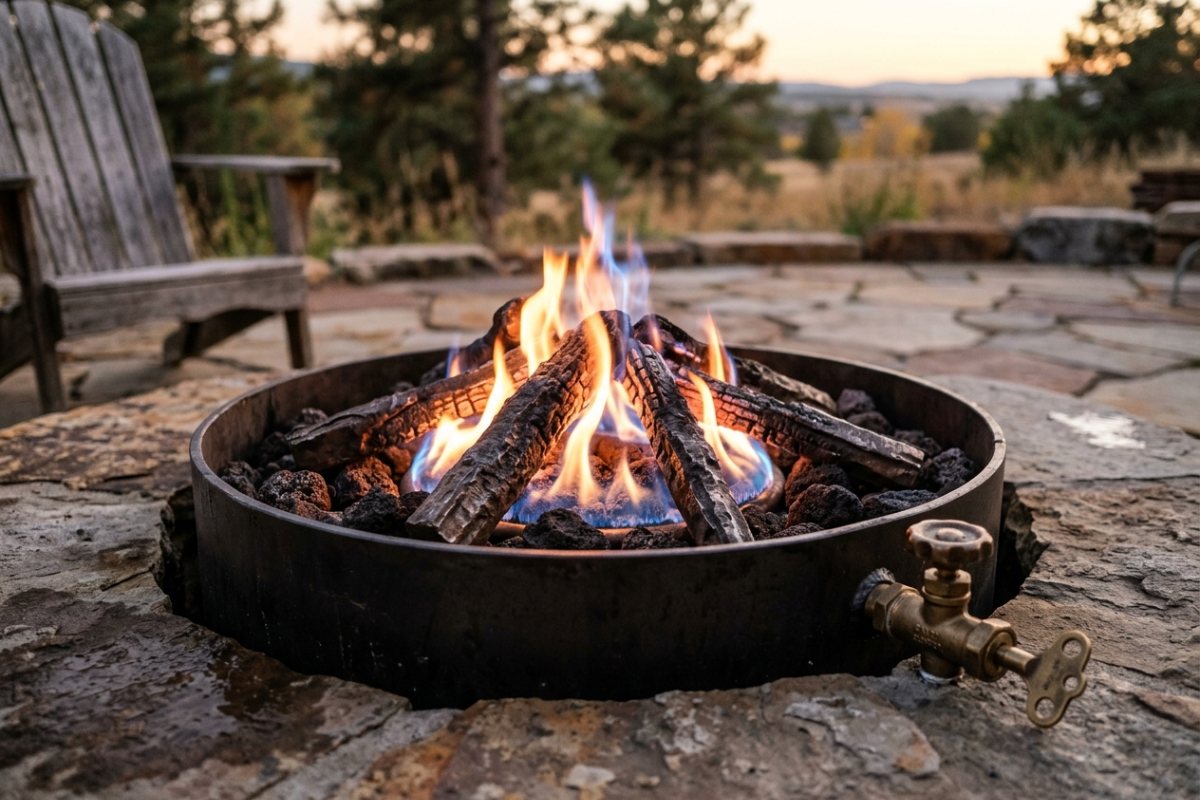
Gas fire pit fire ban exemptions target open flames and drifting embers. A gas device with a control valve produces neither. That’s why it can be exempted. The rule of thumb fire authorities use is whether a fire can be turned off rather than put out.
Summit County’s Stage 1 language permits liquid or gas-fueled fire pits, tables, lanterns and heaters used at least three feet from flammable material. Stage 2 bans nearly everything else while still allowing liquid or gas-fueled devices with on/off switches.
Full closures, town ordinances, HOA rules and extreme conditions can all still shut a gas feature down, and clearance and flame-height conditions usually apply. Confirm current rules before you light anything.
Still, a gas feature is usually still allowed during a Stage 1 or Stage 2 fire ban.
Wood vs. Gas Fire Pits: Safety and Practicality Compared
| Factor | Wood-Burning | Gas (Propane/Natural Gas) |
|---|---|---|
| Embers and sparks | Present; risk rises with wind and dry vegetation | None from the flame itself |
| Shut-off | Must be extinguished and monitored until cool | Valve shut-off in seconds |
| Smoke | Significant | Minimal |
| Cleanup | Ash removal and disposal | Little to none |
| Restriction eligibility | First to be banned | Typically allowed in Stage 1 and 2 (verify locally) |
| Flame control | Manual | Adjustable output |
Fire Pit Safety Essentials for Any Fuel Type
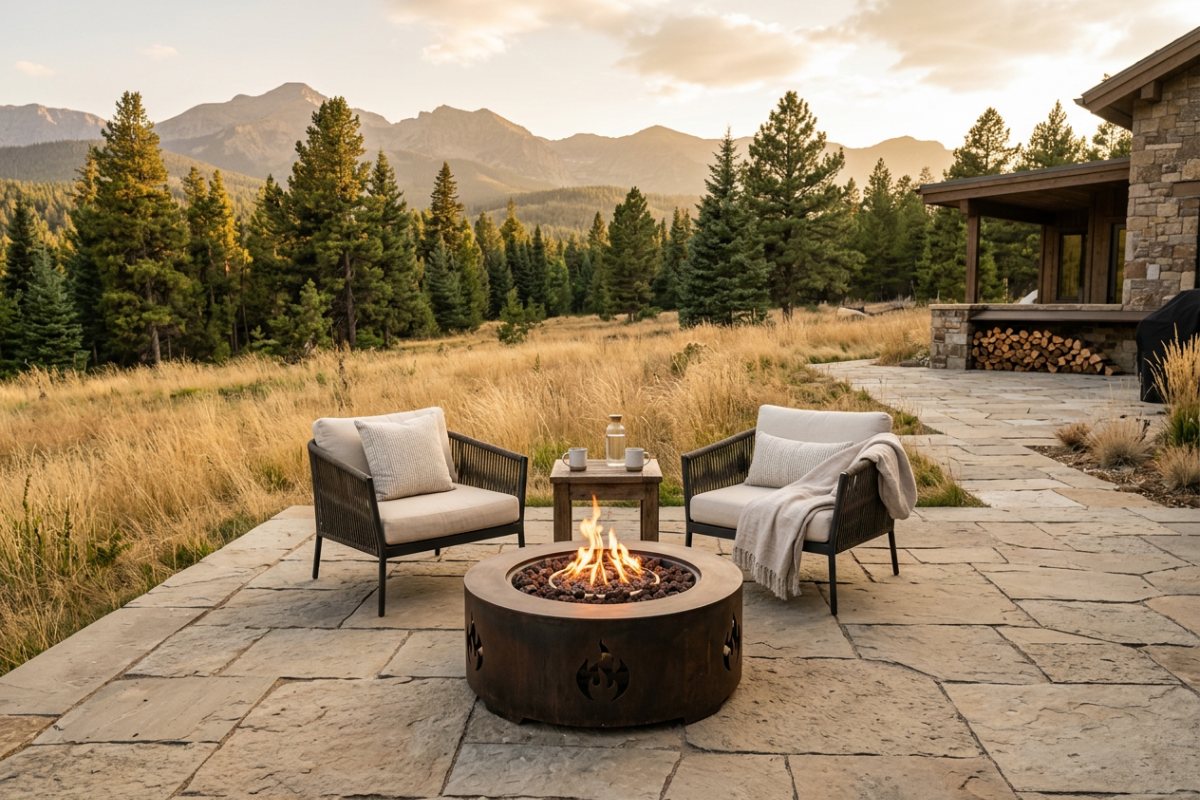
Fire pit safety comes down to the same practices regardless of fuel. Keep the fire away from structures, overhanging branches and dry grass. Watch the wind. Never leave a fire unattended. Keep children and pets at a safe distance, and keep an extinguisher within reach. Federal fire-safety guidance covers the fundamentals, though specific clearance distances come from your local fire district or current code.
Surface matters too. Decks, composite decking, patios and gravel each handle heat and sparks differently, and the right setup for a wood deck looks nothing like the right setup for a stone patio.
Mountain conditions raise the stakes. Wind shifts fast at elevation, fuels dry out, and a small problem becomes a large one in less time than at lower altitude.
Gas Line, Propane Tank and Ignition: Getting the Setup Right
The first setup decision is natural gas through a dedicated line or propane from a tank. Natural gas means no refills; propane means no trenching. Either way, a licensed professional needs to handle the gas connection, in accordance with local code.
Everyday gas safety takes little effort. Run a leak check after installation and after every tank change. Keep the shut-off valve accessible. Place and store tanks properly. Replace damaged hoses or fittings. NFPA standards for gas appliances are the reference most local codes build from.
Why Steel Logs Look and Feel Like Wood Without Being Wood
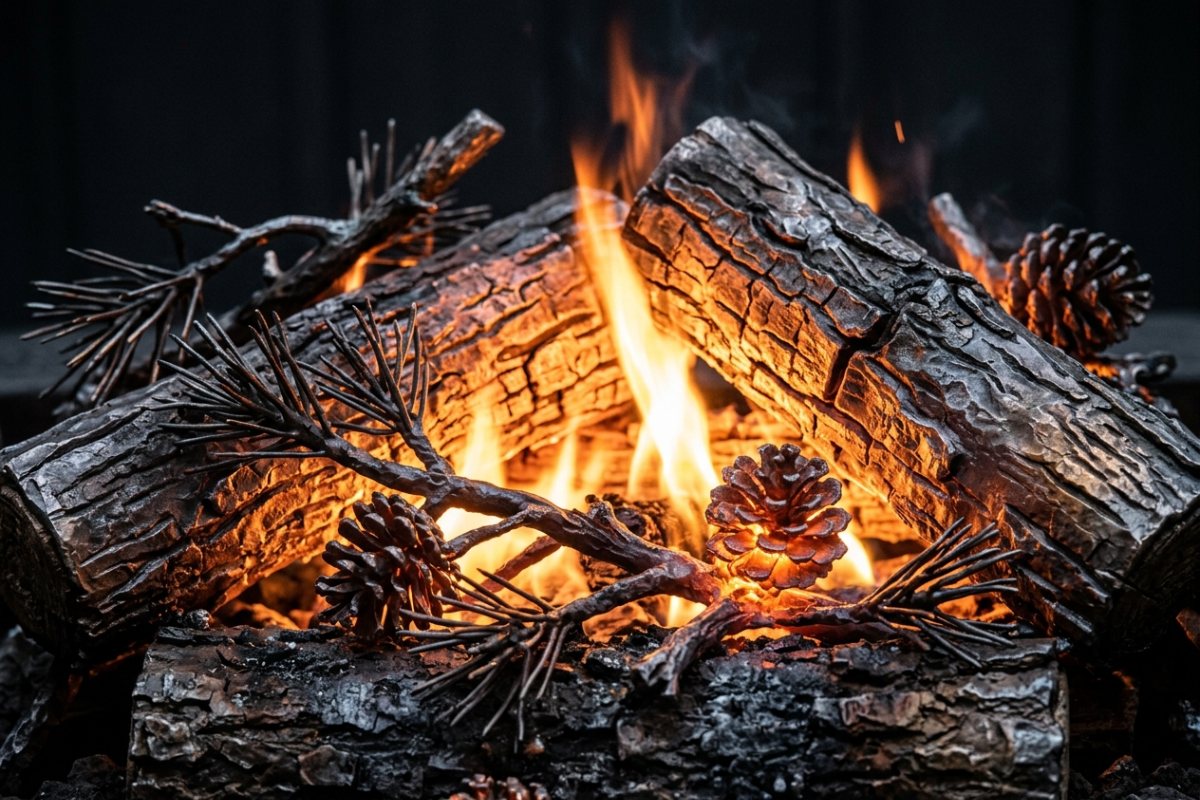
Our logs, branches and pinecones are hand-forged from recycled American steel in our Breckenridge shop, shaped to look like what you’d find on the forest floor. You get the visual character of a wood fire from a fire pit that mostly stays legal through fire season. You can see the full range of custom gas fire pits we build around that idea.
Our fire pits don’t need ash cleaned out or firewood stocked, and steel doesn’t decay the way ceramic does. Every custom feature comes with a lifetime warranty on all parts for non-commercial clients.
Already own a gas fire pit with ceramic logs? Ceramic decays over time where steel holds up, and we retrofit existing fire features with steel log sets rather than requiring a full replacement.
Choosing the Right Breck Ironworks Fire Feature
Summit, Treeline and Trailhead: Choosing Your Tier
The Trailhead is our most affordable model, with rustic logs, branches, and pinecones in a low profile. The Treeline arranges detailed logs in a teepee configuration with more vertical height. The Summit has the widest variety of logs and the most intricate detail, including peeled bark, half and quarter logs, branches, pinecones and pine needles. All three come in 24, 30 and 36 inch diameters.
You can even customize footprint, finish, log set, embellishments, fuel source and ignition. Standard round models produce 75,000 to 300,000 BTUs depending on model and size, and larger custom builds are possible. Full specs for each model are on our featured models pages.
The Nomad: The Versatile Option
The Nomad is our portable model and the most adaptable fire feature we build. It runs on liquid propane, comes with its own base, and produces 90,000 BTUs of radiant heat, enough to warm a four-to-five foot radius. The log set is removable for cooking. It can also be plumbed for natural gas if you’d rather make it a fixed unit. If you want propane flexibility, or you’re starting with one fire feature and expanding later, the Nomad is the model to look at.
Planning Ahead: Pre-Restriction-Season Checklist
To really streamline your personal compliance process…
- Find out which authorities govern your address: county, town, fire protection district, HOA.
- Sign up for your county’s emergency alert system so restriction changes reach you.
- Ask your fire protection district whether a permit is required for your setup.
- Review what your insurer expects of outdoor fire features.
Businesses have an extra layer of rules. Restaurants, lodging properties and event venues should confirm commercial requirements with their local district, and warranty terms differ for commercial clients. Start a custom fire pit inquiry and we’ll walk through what your property needs.
Conclusion
Colorado restrictions target open fires. Gas devices are typically still allowed through Stage 1 and Stage 2, local rules decide, and safe setup matters whichever fuel you choose.
If you want a Colorado fire ban fire pit that stays lit through fire season, look at our custom fire pits and the Nomad. Then confirm your current local restrictions before you light it.
FAQs
Do I need a permit or inspection to install a gas fire pit in Colorado?
It depends on your jurisdiction and the scope of the work. Permanent gas line installation generally requires a permit and inspection, and some fire protection districts have requirements of their own for outdoor fire features. Check with your local building department and fire district before work begins.
Natural gas or propane: which is the better fuel for a fire pit?
Neither is better outright. Natural gas suits properties with a line already in place, since there’s nothing to refill. Propane suits properties without one, and it allows a moveable fire feature. The question is usually what’s already available at your address.
Can my HOA or insurance company restrict a gas fire pit even if the county allows it?
Yes. County restrictions set a floor, not a ceiling. An HOA can impose stricter rules on its community, and an insurer can set its own expectations for outdoor fire features. Check both before you buy.
Can an existing wood-burning fire pit be converted to gas?
Often, though it depends on the existing structure and what the conversion requires. A licensed professional should assess the setup and handle the gas work. We also retrofit existing gas fire pits with steel log sets, which is a different project from a wood-to-gas conversion.
Is a gas fire pit suitable for a vacation rental or commercial patio?
Yes, and we build for restaurants, hotels and resorts regularly. Commercial installations carry their own code requirements, and warranty terms for commercial clients differ from the non-commercial lifetime warranty. Confirm both before ordering.