
A fire feature should do more than look good from the patio door. When friends gather on a cold mountain evening, you want the fire to deliver the radiant heat and steady flame you planned for, and that starts well before anyone lights the burner.
One of the least visible parts is the fire pit gas regulator. It manages the pressure of the fuel reaching the burner. But even the right regulator can’t make up for a gas line that’s too small, a propane supply that can’t keep up, or a system designed without the fire feature’s requirements in mind.
We build handcrafted custom gas fire pits in Breckenridge, Colorado, and we plan each one around the whole project, from footprint and fuel source to installation needs. Here’s what homeowners, builders, and landscape professionals should understand about regulators before they finalize a fire pit design.
Key Takeaways
- A gas regulator reduces and controls gas pressure so it meets the requirements of the downstream system.
- Pressure and gas flow are different. A regulator can’t add fuel capacity to an undersized line.
- Natural gas and propane have different supply arrangements, and the right regulator configuration depends on the exact fire feature and installation.
- Low flames or unreliable ignition don’t automatically mean a regulator is defective.
- Large, high-output fire features need early coordination between the fabricator, builder, and qualified gas professional.
What Is a Fire Pit Gas Regulator?
A gas pressure regulator is a mechanical device that controls the pressure of gas traveling from a supply source toward a burner. Think of it as a traffic controller, not a fuel pump: it keeps delivered pressure in the right range as demand and supply conditions change.
Three terms explain the job.
Inlet pressure is the pressure entering the regulator from the upstream supply.
Outlet pressure is the pressure leaving the regulator toward the downstream piping or appliance.
Gas flow is the quantity of fuel moving through the system over time. The fire pit needs enough flow to support its intended heat output.
A fire pit can show satisfactory pressure while it’s off and drop once the burner is running, so an installer checks the system under operating conditions instead of trusting a single pressure reading.
Inside a conventional fire pit gas regulator, a diaphragm, spring, and valve respond to downstream pressure, adjusting how much gas passes through to hold the designed outlet pressure. That doesn’t mean every fire pit uses the same regulator, or that every installation needs a dedicated regulator right beside the appliance. The arrangement depends on the supply system, the burner package, manufacturer instructions, and applicable codes.

How Does a Gas Pressure Regulator Work in an Outdoor Fire Pit?
Your fire pit is one part of a larger gas-delivery system. Depending on the project, fuel may come from a natural gas utility service or a propane storage system, pass through upstream regulation and properly sized piping, then through approved controls and connections to the burner.
The regulator is one piece of that chain. The system also needs the correct fuel type, enough supply capacity, the right controls, and a burner designed for its operating conditions.
A burner operating outside its design conditions may not produce the intended flame height or consistency. Burner design and fuel input determine heat output, and a regulator can’t push BTUs past what the complete installation can supply.
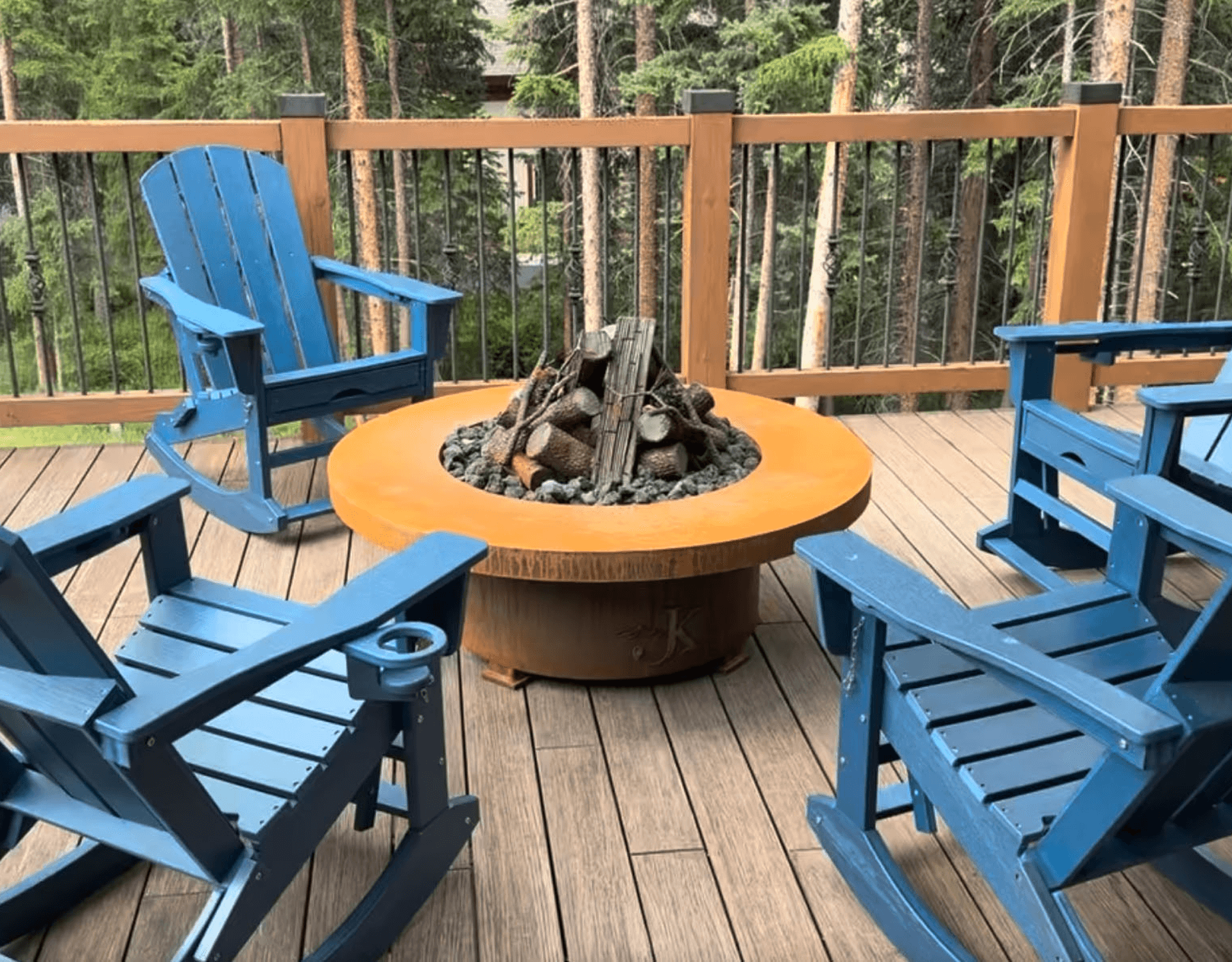
Picture a big patio in Breckenridge built around a sculptural fire feature, with textured steel logs on a large custom base. If the gas supply was planned for a small decorative flame, the finished installation won’t match that design, which is why gas supply belongs in the design phase.
Natural Gas Regulator vs. Propane Gas Regulator for Fire Pits
We build fire features for natural gas or propane. Both produce a realistic flame and real radiant heat, but the supply systems aren’t interchangeable.
Natural Gas Regulator Requirements
Many homes receive natural gas through a utility distribution system that already includes pressure regulation at the meter. Other installations need additional regulation as part of the building system or the specified appliance configuration.
A qualified installer needs to confirm the pressure and gas volume available at the proposed fire pit location, especially when the home has other gas appliances. A large outdoor burner can’t be sized in isolation from the rest of the property’s gas demand.
Propane Regulator Requirements
Propane is stored under pressure, so a propane installation uses regulation to deliver gas at the pressure the system and appliance require. The number and placement of regulation stages vary with the equipment, the storage arrangement, and the design.
Storage capacity is the other half. A small cylinder that suits a compact fire feature may not keep up with a larger, higher-output installation. As our trade professionals page notes, a standard propane tank works for the Nomad and a 24-inch fixed assembly. Anything larger needs a dedicated line or a propane source of at least a 100-lb cylinder, and the exact setup still needs project-specific confirmation.
Can You Use the Same Regulator for Both Fuels?
Don’t assume so. Fuel compatibility, inlet and outlet pressure ratings, flow capacity, and the manufacturer’s approved application all determine whether a regulator is right for the job. A fitting that physically connects doesn’t.
| Fuel | Typical Supply | What to Confirm |
|---|---|---|
| Natural gas | An existing building or utility supply | Available pressure and total system capacity |
| Propane | A tank or larger storage system | Regulation, storage capacity, vaporization, and expected demand |
For either fuel, follow the fire feature and gas equipment specifications, applicable codes, and the direction of a qualified gas professional.
How to Tell if a Fire Pit Gas Regulator or Supply System May Have a Problem
An outdoor fire feature can give clues when its gas-delivery system needs attention: flames lower than expected, unreliable ignition, an uneven flame pattern, or performance that changes when other gas appliances are running.
Those symptoms need investigation, but they don’t identify a faulty regulator on their own. The cause could also be upstream supply pressure, piping size, fuel availability, a valve or control, a burner obstruction, or another installation condition. Wind changes how flames look outdoors, too.
The right response is professional diagnosis, not adjusting a regulator to see what happens. A qualified technician can check the manufacturer’s requirements and find whether the problem is regulation, supply, controls, or the burner.
If you smell gas or suspect a leak, don’t light or troubleshoot the fire pit. Avoid flames, sparks, and switches, get away from the area, and call your gas supplier or 911 from a safe location. The Propane Education & Research Council’s propane safety guidance covers the full procedure.
How to Choose the Right Gas Regulator for a Custom Fire Pit
The most useful question isn’t “Which regulator should I buy?” It’s “What does this fire feature need from the gas supply?”
A licensed or otherwise qualified gas installer should coordinate with the fire feature manufacturer to establish the fuel type, required operating pressure range, available inlet pressure, burner BTU demand, required flow capacity, piping size, regulator suitability, environmental conditions, and any venting or protection requirements. Applicable fuel gas codes, including the National Fuel Gas Code, and manufacturer instructions govern the final design.
Our standard round fire features are rated between 150,000 and 300,000 BTUs depending on size, and we’ve built custom features over 1 million BTUs, so the fire feature’s demand gets planned alongside the rest of the property’s gas system.
For a smaller project, that conversation can start with the desired size and the available fuel source. A larger custom installation may need coordination among the architect, landscape designer, general contractor, and gas professional before hardscape and utilities are finalized.
Altitude, exposure, distance from the gas source, and the final burner configuration can also influence engineering decisions, and a qualified professional determines the correct design.
Why Gas Pressure Planning Matters for Breck Ironworks Fire Pits
In Breckenridge, we know the difference between a fire that looks inviting and one that makes you want to stay outside. Mountain evenings get cold, and an outdoor space needs a centerpiece that puts out real radiant heat and fits its surroundings.
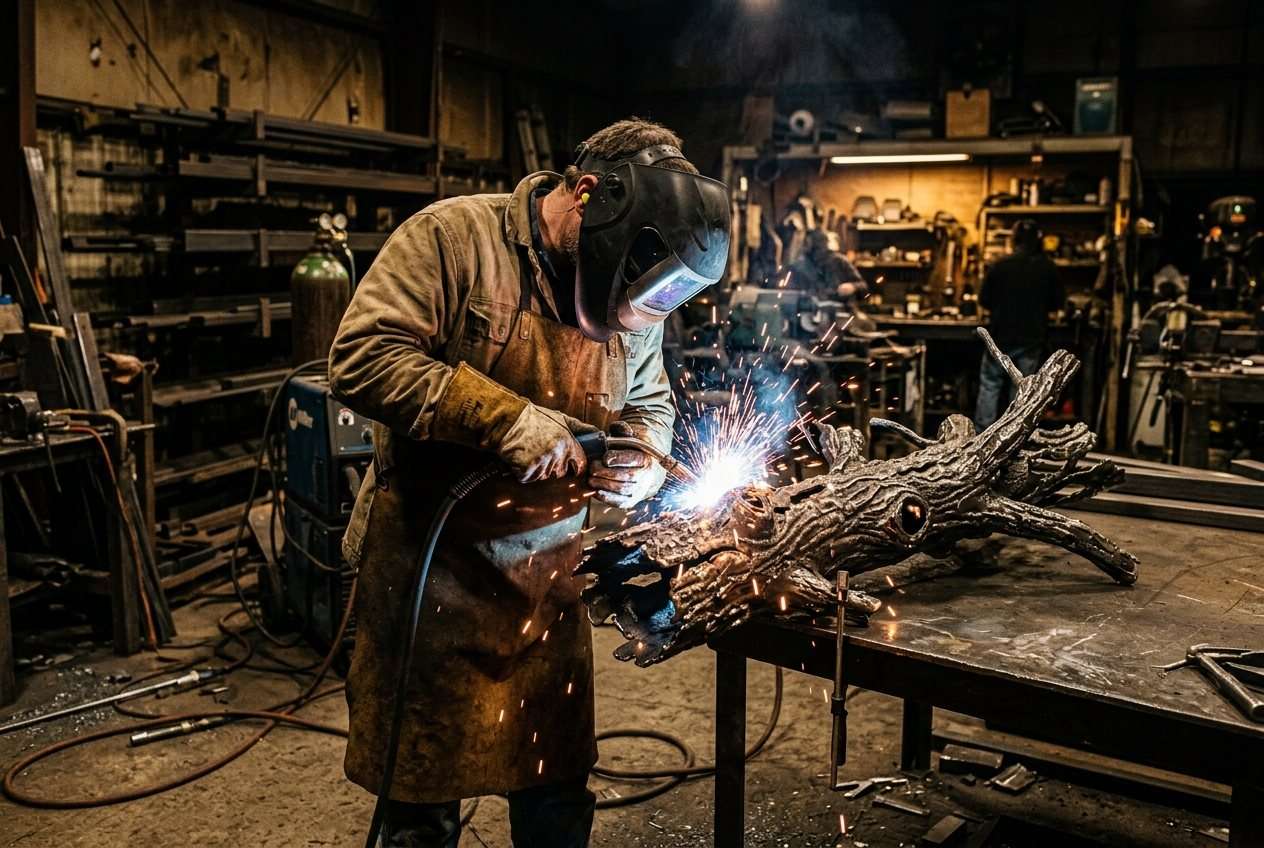
We’ve been shaping steel here since 1999. Our steel fire pit line grew out of Colorado’s fire restrictions and the search for a cleaner alternative to wood and ceramic media. Our artists and fabricators shape recycled steel into steel logs, branches, and pinecones, one piece at a time.
Our Trailhead, Treeline, Summit, and Nomad models offer different compositions and uses. The Treeline, for example, arranges individually detailed steel logs and branches in a taller, teepee-inspired form. Across the line, the goal is a fire feature that becomes the place people gather.
Those design decisions need a mechanical foundation. We work from your plans to understand the space, how people will sit around the feature, and what heat output fits, then identify what the installation requires. Early conversations about gas capacity keep the fire feature consistent with the patio, landscaping, and steelwork around it.
You can see our handcrafted steel fire pit logs in detail, and if you already have a design or site plan, we’ll talk through how the fire feature fits the space and coordinate specifications with your installation team.
Fire Pit Gas Regulator FAQs
Does every gas fire pit need a regulator?
Not necessarily one installed at the fire pit. Every gas fire pit needs the right supply-pressure arrangement, but some systems are regulated upstream. The appliance specifications and installation design determine what’s required.
Do propane fire pits need a different regulator from natural gas fire pits?
Yes. A propane regulator for fire pit use must be rated and approved for propane, its pressure range, and the gas flow the burner needs. Propane and natural gas components aren’t interchangeable.
Can a bad regulator cause a low flame?
Yes, an unsuitable or malfunctioning regulator can contribute to a low flame. Undersized piping, inadequate fuel supply, and restricted components can produce the same symptom, so a qualified technician should diagnose the cause.
Does a regulator increase gas pressure or BTU output?
No. A conventional pressure-reducing regulator doesn’t create gas supply capacity or raise the fire pit’s rated heat output. The burner needs both proper pressure and adequate flow to operate as designed.
Who should install or replace an outdoor gas regulator?
A qualified gas professional, following manufacturer instructions and applicable requirements. It isn’t a DIY adjustment or a trial-and-error repair.
Plan a Custom Gas Fire Pit That Performs as Beautifully as It Looks
The gas regulator is one of the smallest components in an outdoor fire feature, and it points to a larger principle: reliable performance comes from treating design and fuel delivery as one project.
We work with homeowners, builders, and designers who want both a handcrafted steel fire feature that fits its setting and the radiant heat people came outside for.
You don’t need to know exactly what you want before reaching out. Whether you’re starting from one of our models or a one-of-a-kind piece, talk with a fire feature specialist about your space and your plans. We’ll clarify the fire feature’s requirements so your installation team can design the right gas supply.